Table of Contents
Introduction – Car Safety Regulations 2026
Car security is one of the issues that is of utmost importance and is taken into account by the manufacturer, government, and the driver with the rapid progress of the automotive industry. Cars are no longer just mechanical gadgets; in 2026, it is a smart networked system capable of preventing accidents, saving people, and even anticipating danger before it happens.
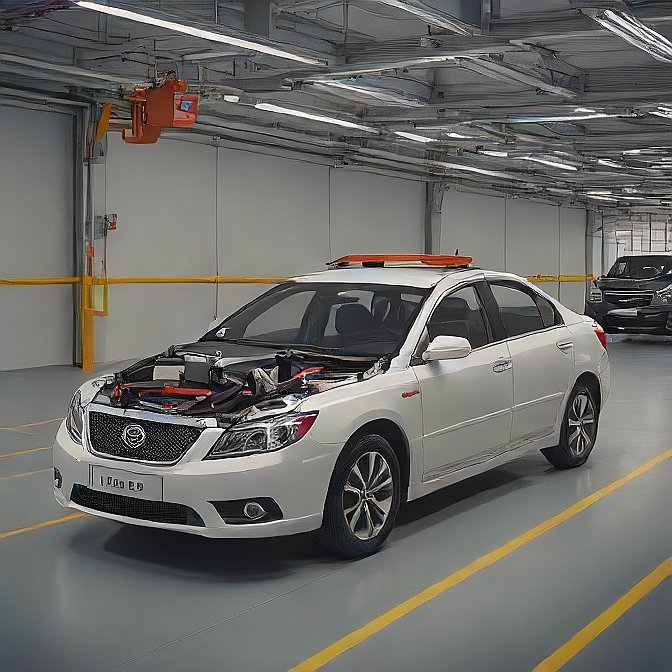
Due to the emergence of more sophisticated driver assistance systems, electric cars, and automated driving systems, the international safety standards are changing greatly. Also, governments are instituting stricter regulations to ensure that innovation does not take the lives of people. These inventions are shaping the manner in which vehicles are being designed, tested, and driven on the streets all around the world.
The safety of the driver and the passengers is not the only topic that the new era of car safety is concerned about, but also the security of the pedestrians, cyclists, and the transportation ecosystem in general. The next level of cybersecurity will involve smarter crash prevention systems, which will be the beginning of the year 2026, where safety is associated with technology.
The Evolution of Car Safety Regulations: From Basics to Smart Systems
Historical Developments of Safety Regulations of Cars.
The history of car safety laws has developed greatly throughout decades. The first cars were extremely bad in design and protection features because they had very few features in terms of seat belts and a plain design of the structure to safeguard the occupants. The level of vehicle safety has transformed over the years, with some of the greatest inventions that include the use of airbags, anti-lock braking system (ABS), and crumple zones.
Switching to uniform crash testing and safety ratings was introduced by such organizations as the National Highway Traffic Safety Administration (NHTSA) and the European New Car Assessment Programme (Euro NCAP). Such systems forced the manufacturers to place more emphasis on safety when designing and engineering in order to save more lives in the world.
Proactive Safety Features Passivity
The conventional method of car safety had a high concentration on passive safety, or the feature that was intended to protect the occupants in case of an accident or a post-accident crash, such as the seat belts, airbags, and frame reinforcements. Despite the fact that these innovations helped a lot in the minimization of the deaths, they still relied on the accident which already occurred.
On the other hand, the existing operating safety measures aim at preventing accidents before they happen. There are such technologies as electronic stability control (ESC), traction control, and automatic emergency breaking which are actively used to assist a driver to avoid the accident. This is a great advancement in the safety of automobiles in this situation because it is moving towards a preventive approach.
International Safety Bodies and Governments’ Role.
Indeed, the formulation of standards of car safety is highly facilitated by the efforts of global organizations and governments. NHTSA and Euro NCAP regulatory authorities continue to retest and revise the test procedures in order to keep up with technological advancements. Such agencies ensure that manufacturers observe very high levels of safety prior to delivery of the vehicles to the consumer.
Global cooperation has also become necessary. Some companies, like the United Nations Economic Commission for Europe (UNECE), help in harmonizing the safety standards across the various countries, thus making it easy to persuade manufacturers to produce vehicles that are consistent with the international standards. This concerted move will see a similar standard of safety, regardless of the country of manufacturing or selling a car.
Advanced Driver Assistance Systems (ADAS): The New Safety Standard
Modern cars require ADAS to be installed.
The Advanced Driver Assistance Systems (ADAS) are not a luxury anymore because in 2026, the same will be a mandatory requirement in most of the regions. The automakers are also being subjected to increasing demands by the governments to make these technologies one of the mandatory requirements of cars in terms of safety.
Such a change can also guarantee that even the entry-level cars will have the necessary safety equipment and, therefore, the potential of human error as a major cause of road accidents will be minimized.
Interesting Functions: Lane Assist, Adaptive Cruise Control, and Emergency Braking.
The contemporary ADAS consists of a combination of intelligent functions that are designed to help the driver:
- Lane Keeping Assist: Assists against accidental lane drift.
- Adaptive Cruise Control: It is a feature that automatically controls the speed so as to maintain a safe distance from other vehicles.
- Automatic Emergency Braking (AEB): It is a system that scans for any possible accident and automatically brakes in case the driver fails to react.
All these combined factors contribute to a safer road condition, considering the fact that they are observing the situation on the road and help the driver in real-time.
The way ADAS is enhancing the safety of cars on the roads generally.
The aspect of car safety is also being transformed by the ADAS technology because it greatly minimizes human error, which forms the highest percentage of accidents on the road. With these systems, the drivers are able to respond more quickly to the hazardous scenarios by relaying real-time information and automatic response which inhibit or permit the drivers to swiftly respond to the harmful scenarios.
In the long run, the extensive use of ADAS would result in a reduction of collisions and fatalities, as well as safer roads for all people. The systems are also making their way to full autonomous driving, where safety has also been instilled in the process of developing and running a vehicle.
Autonomous Driving and Its Impact on Car Safety Regulations
Levels of Autonomous Driving and Legal Impact.
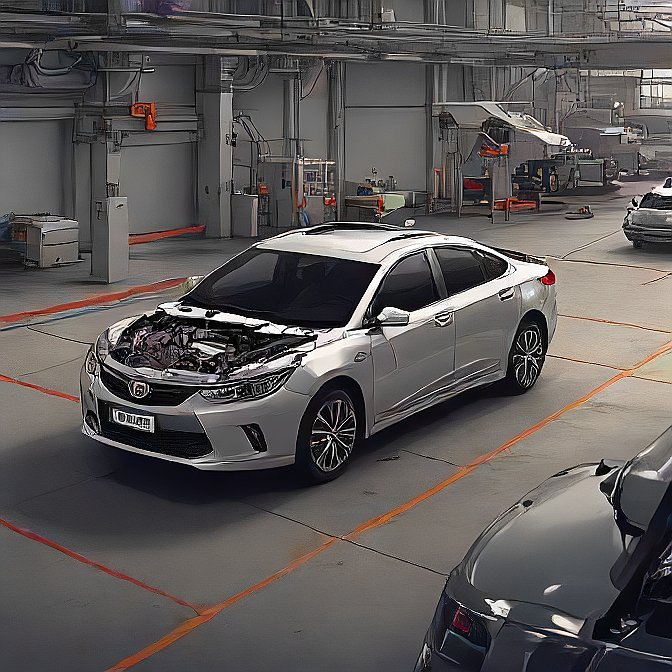
Autonomous driving has been divided into autonomous driving levels by the Society of Automotive Engineers (SAE), starting with Level 0 (no automation) to Level 5 (full automation). These levels are the different extents of participation of the driver, whose highest level results in the car taking off the hands of a human being.
The higher the degree of autonomy, the more complicated the legal responsibility is. An example being that, whereas in partially automated systems (Levels 2-3) the responsibility of the driver is to check the road, in higher levels (Levels 4-5), this can be transferred to the manufacturer or software provider. This shift is causing governments to rethink the ancient policies of traffic and insurance systems, and car safety regulations are more vibrant than ever.
Self-Driving Cars Safety Tests and Approvals.
Autonomous cars should be thoroughly tested and cleared before they can be used on the streets. The standards of regulatory authorities such as the National Highway Traffic Safety Administration and European Commission standards demand a high degree of verification of the correctness of the sensors, decision-making algorithms, and the dependability of the system.
The tests include simulated environments, closed-track tests, and road tests in different conditions of heavy traffic, bad weather, and unexpected conditions. This kind of stringent conditions ensures that the autonomous systems are the safest car systems in their implementation at scale.
Autonomous Car Safety: Ethical and Legal Problems.
Autonomous driving raises advanced ethical concerns despite the fact that technology has been created. One of the major concerns is the question of decision that has to be made when the inevitable accidents happen- how should a car prioritize lives in case of emergency?
There are also legal difficulties on the issue of liability. Depending on the accident caused by an autonomous vehicle, the manufacturer, software developer, or even the owner may be the case. The unanswered questions show that new sets of laws are necessary to follow the innovation.
There is no denying, though, that there is a need to balance innovation and accountability to ensure that autonomous vehicles not only increase the safety of cars on an international scale but also do not deteriorate it.
Check Out: Car Design Trends 2026: 10 Stunning Innovations You Can’t Miss.
Enhanced Crash Testing and Real-World Simulation Standards
New Crash Test Programs in 2026 cars.
The standards of crash testing in 2026 are much more advanced than ever. More realistic and challenging crash scenarios are being introduced by organizations such as the European New Car Assessment Programme (Euro NCAP), the Insurance Institute for Highway Safety (IIHS), etc.
These new measures are not just the usual frontal and side-impact exams. They now include:
- Protection of the vulnerable road users (pedestrians and cyclists)
- Multi-angle collision scenarios
- High-speed and rollover simulations.
- Crash tests of driver assistance systems.
These are improved tests that guarantee that the cars can address the current car safety standards of modern driving conditions, which are becoming more and more complex.
Use of AI and Simulation in Safety Testing
Artificial intelligence is transforming testing of cars prior to their hitting the road. Manufacturers have also begun to use simulations in lieu of real life crash tests that simulate thousands of real life conditions.
Artificially-intelligent simulations allow an engineer to test how a vehicle will behave under a scenario that is unlikely or dangerous (e.g. some sudden obstacles, irregular human behavior or extreme weather conditions) without risking human life. This method will greatly accelerate development, and enhance accuracy and reliability of car safety tests.
The Impact of Stiffer Testing on On-the- Road Automobile Safety.
The more challenging the tests, the safer the cars on the road. These regulations enhance the quality of cars since by challenging the manufacturers to a higher level, they make the cars more apt to safeguard occupants and avoid accidents.
Innovation is also encouraged by better testing, and smarter, safer, and more trustworthy autonomous functions, improved materials, and smarter safety systems are created. This has not only helped to make modern cars safer under controlled conditions, but has also helped to make them stronger in the real world driving condition.
Ultimately, more advanced crash testing and simulation technology is an important move towards ensuring the safety of cars and minimizing road accidents across the world.
Electric Vehicle (EV) Safety Regulations: Addressing New Risks
Fire and Safety Standards of batteries.
With the proliferation of electric cars, car safety standards are evolving to meet new requirements- especially those relating to high-voltage batteries. Lithium-ion batteries are efficient, but can be dangerous, including thermal runaway, overheating, and fire hazards, when damaged or poorly handled.
The stringent safety standards imposed by regulatory authorities like the European Commission, National Highway Traffic Safety Administration, and many others have forced manufacturers to:
- Utilize better battery management systems (BMS).
- Guarantee thermal security and air conditioning.
- Full fireproof and crash-resistant.
- Shielding of batteries against a collision.
These will go a long way in minimizing fire hazards and improving the safety of cars, generally in electric cars.
Electric Vehicle Safety.
The electric vehicles come in a special construction since the bulk of the battery pack lies under the floor. This low center of gravity provides stability and reduced possibility of rollover, at the cost of new crash safety issues.
Manufacturers need to develop impact-resistant buildings and reinforce the battery casings to make sure that the battery will not be destroyed in collisions. Specialized crash tests are carried out by organizations like the European New Car Assessment Programme (Euro NCAP), which aims to determine the safety of EVs when it comes to passenger and battery safety.
Such improved standards mean that EVs will be able to match contemporary car safety requirements and overcome their engineering difficulties.
Electric Safety Procedures.
The issue of safe charging infrastructure is also associated with car safety as more EVs are on the road. Improperly built or improperly maintained charging systems can result in an electrical accident, heating, or even a fire.
- Some changes to regulations have been made to:
- Electrodes: certified and universal.
- Overcurrent and overheating protections.
- Ground fault breakers and circuit breakers.
Regularly, charging stations should be inspected and maintained.
These safety measures will help to keep the home charging systems as well as the public charging systems reliable to help in the safe proliferation of EV use throughout the world.
Driver Monitoring Systems: Ensuring Responsibility Behind the Wheel
Fatigue Detection and Attention Monitoring
Road accidents are caused by driver distraction and fatigue. New car safety systems have already been introduced, which track the activities of the driver in real time, via fatigue sensors.
Such systems monitor signals such as eye movement, blinking, steering, and head movement in an attempt to identify drowsiness or loss of attention. Where the fatigue exists, the machine alerts the driver so that he can relax or concentrate.
Machine Learning Moving Behaviors.
Artificial intelligence is becoming significant in enhancing car safety by constantly monitoring driver behavior. The AI systems take into account the driving behavior, such as driving speed, braking, lane discipline, and reaction.
The system might additionally give some feedback or alter vehicle settings during unsafe driving, and more fundamentally, block certain functions. It is a preventive measure towards mitigating potentially dangerous driving habits and making the roads safer.
Driving With No Accidents by Sending Live Pings.
The driver monitoring systems are programmed to respond to danger immediately danger is detected. Drivers may be cautioned about:
- Lane departure
- Race and run cars or people.
- Breathtaking sleaziness or distracter.
- Unsafe following distances
The car can even correctively act to prevent an accident (to brake or to steer) on some advanced systems. The technologies are transforming the concept of car safety by introducing human-consciousness to intelligent automation, making driving experience safer and more receptive.
Conclusion
Car safety in 2026 is changing radically due to increased technological development and the more strict international regulations. Since the invention of passive safety systems, to the emergence of intelligent systems such as ADAS, autonomous driving and AI-based monitoring, cars are increasingly taking the initiative to avoid accidents rather than merely reacting to them.
New advancements in fields like cybersecurity, electric vehicle safety, and more rigorous crash testing are broadening the definition of car safety to include physical safety as well as digital security and environmental safety. Meanwhile, international regulatory organizations are collaborating on the development of common standards that provide consistency, reliability, and increased safety levels in any market.
With these changes still continuing to take place, drivers, passengers, pedestrians, and cyclists are bound to find the future of driving a much safer place to be. Finally, the convergence of technology, regulation, and innovation is creating an ecosystem of transportation that is smarter, safer, and more secure.
For more info: Click Here.
FAQs About Car Safety Regulations 2026
1. What are the most important car safety changes in 2026?
Key changes include mandatory Advanced Driver Assistance Systems (ADAS), stricter crash testing standards, enhanced EV battery safety regulations, and the introduction of cybersecurity requirements to protect connected vehicles.