
Table of Contents
Introduction – A New Era of Mobility
The world of transportation is as close to a revolution as it has ever been. The Self Driving Cars are making their way into our lives and it is not just a simple fact of the future but it is the reality, which is being loaded to us by the blended and fast-growing artificial intelligence, machine learning and sensors. The world is anticipating a great deal when we get to the year 2025. The most important question is to what extent we are distant from having roads filled with fully autonomous vehicles? And people are asking it.
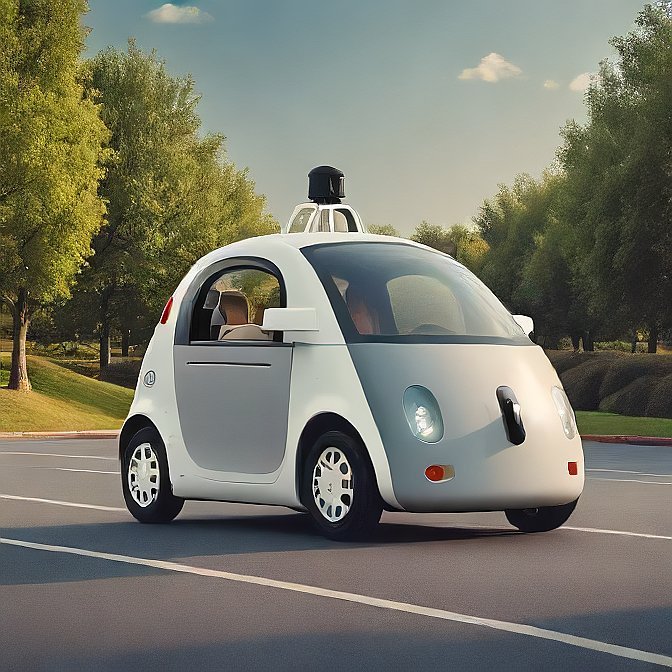
We shall look into the current state of Self Driving Cars, the technology which is rendering this car an actuality, the obstacles that are impeding the full take-up up and the question of whether the year 2025 will be the one we begin to see in a driverless world. buck your belts in and it is a fine ride along the highway.
Self Driving Cars: What Does It mean to be Autonomous Driving?
Before we soar to the extent of how soon we can have an all-driving future, we should get a clue about what is actually meant by autonomous driving. Not every car with smart functions can be ranked among Self Driving cars; the majority of the cars do not substitute the driver but rather give support to the driver.
Autonomy Levels (Level 0 to Level 5) Explanations.
There are five levels of autonomy determined by Society of Automotive Engineers (SAE):
- Level 0: no automation- all is done by the driver.
- Level 1: Lane assist or cruise control type of simple assistance services.
- Level 2: The car comes to your assistance in steering and acceleration, but you should be awake.
- Level 3: Conditional automation -The system will drive, but under some conditions, you may need to do something.
- Level 4: High automation- the car is self-driving in most environments.
- Level 5: Full automation – Full Self Driving Cars, where it is not required that the human being at all interferes with the car.
Where Current Vehicles Stand
The current vehicles on the road are mainly Level 2 or early Level 3 i.e. they do help a lot, but still need a human backup. Autonomous cars at level 5 are fully autonomous and they are still in testing and development.
Driver Assisted vs. Self Driving Cars.
- Driver-assist cars assist the driver; however, they must be monitored by humans.
- Running Cars have all the functions of driving, even though there is no steering wheel or pedal.
The Road to 2025 – Where We Are Right Now
The development of self-driving moves fast. The closer we are to mass adoption every year.
Recent Advances in Self Driving Cars Technology.
- Artificial intelligence is increasing in the rate of decision-making.
- Automatic braking and lane keeping are driver aids that are becoming the norm.
- The cities around the world are testing autonomous fleets and transport solutions.
Cases of Companies on the Frontline.
- Auto upgrade Tesla-Autopilot, Full Self Driving.
- Waymo Robotaxi elsewhere in the US.
- There are GM Cruise, Mercedes-Benz, Hyundai, Nvidia, and others, which are developing autonomous systems.
Real-World Deployments Already Happening
- Phoenix and San Francisco are the locations of driverless taxis.
- Delivery service in some selected areas is self-driving.
- Pilot projects of self-driving trucks and buses.
Check Out: Beginner Bikes 2025: Top Picks Every New Rider Must Try.
Emerging Technologies that are Autonomous Vehicles
The trick of the Self Driving Cars is that the advanced technologies are combined to imitate human driving – and in most instances, do it better.
AI and Machine Learning in Autonomous Driving
The AI assists the vehicles to comprehend the environment, decide in real-time, and train using millions of driving situations.
Sensors, LIDAR, Radar and Cameras – How Cars See the World.
- The cameras detect road signs, pedestrians and road lights.
- Radar operates under low visibility to detect the distance and speed.
- LIDAR is an environmental mapping technology that uses laser beams to create in 3D map.
The two of these give a full view of the ocean to navigate.
5G Connectivity and Advanced Mapping Systems
5G permits the exchange of data at an extremely high speed, which is critical in the real-time response. HD maps enhance this navigation template and route prediction.
Significant Advantages that have fueled the need to have self driving cars.
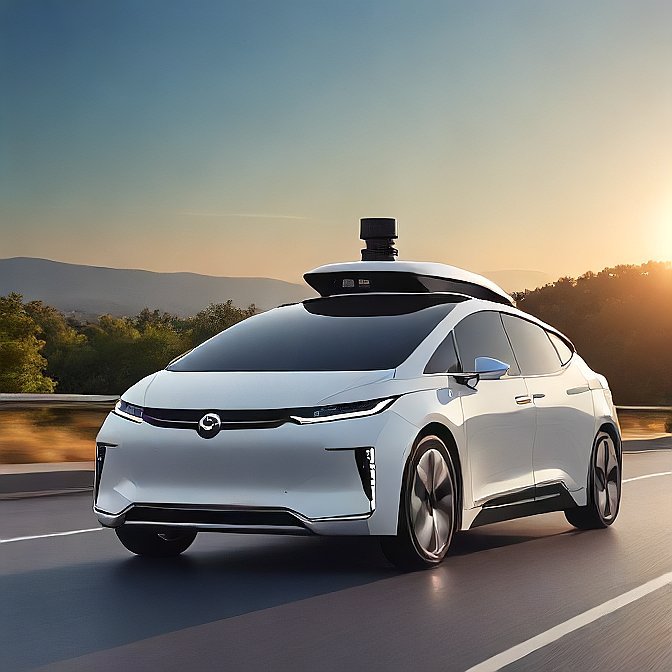
Autopilot vehicles have the potential to transform the transport system – and the reasoning is solid.
- Reduced Accidents and Safer Transport
- Most accidents result from human error. Self-driving systems also ensure that there is no fatigue or distraction in the awareness.
- Mobility for Elderly and Disabled Users
- Driving Cars provides mobility freedom to mobility-limited users.
- Traffic and Fuel Efficiency.
- Intelligent navigation and efficient driving eliminate traffic and general fuel consumption.
- Economic Impact and Environmental Impact.
- The sustainability of the world is supported by lower delivery costs, lower emissions, and new business opportunities.
The Challenges No One Can Ignore
Innovation is very complex. A number of obstacles still lie between us and the fully autonomous future.
- Safety Concerns and Accident Case Studies
- Real-world safety has been questioned by the occurrences in testing, which have slowed the adoption.
- Legal Frameworks and Liability Issues
- Fault and responsibility of autonomous accidents are yet to be clearly defined in the policy-making process.
- Ethical Dilemmas in Decision Making
- It is hard to program moral choices, particularly in situations of inescapable collisions.
- Cybersecurity and Data Privacy Risk
- Efforts to hack cars that are interconnected might occur. User data has to be secured.
Do Self Driving Cars Make It to 2025? Honest Reality Check
Though exuberating, the reality is that fully autonomous Self Driving Cars are still not in a position to be used on a large scale.
How Close We Truly Are to Level 5 Autonomy
Although Level 3 and Level 4 cars are already available on the roads in small spaces, Level 5 autonomy, which means the type that does not involve human operators, remains at an experimental level. The existing AI systems are quite competent in controlled settings and fail when it comes to the unpredictable conditions of the real world, such as harsh weather or traffic jams.
Urban vs Rural Rollout Differences
- Cities: The fact that people are crowded, and traffic is more complex, makes complete autonomy more difficult to execute.
- Rural locations: Autonomous systems will work more efficiently in rural regions because of lower traffic congestion and less complex road systems, so in the near future, rollout in the rural areas is more viable.
What Still Needs Improvement
- Areas of sophisticated decision-making in situations of uncertainty.
- Reliability of the sensor used in natural disasters.
- Close integration with the existing traffic regulations and infrastructure.
- Cost-cutting is to be embraced by the mass market.
To put it simply, we are already rather close, yet we likely will not have a fully driverless world in 2025, only partial autonomy and pilot projects.
Expert Projections: What the World might be like in 2025 and Beyond.
The near future of Self Driving Cars has been a mixed opinion among industry experts, but optimistic.
Short-Term Expectations
- Increase in the number of Level 3 and Level 4 cars in the controlled areas.
- Increased autonomous delivery services are being provided.
- Greater driver-assist technology in ordinary automobiles.
Should We Have Completely Autonomous Fleets Anywhere Soon?
Even though out of pilot cities, small fleets were possible, Level 5 autonomous vehicles were not able to be rolled out on a large scale by 2025. Still evident are regulatory, technical and safety barriers.
Future Mobility 2030 and Future Reality.
- Due to the autonomous taxi cars and delivery fleets, it will become the norm in the urban hubs.
- Personal cars that are entirely driverless would be able to reach niche markets.
- It can be changed with the implementation of smart cities, IoT, and V2X (vehicle-to-everything) communication and transform commuting and logistics.
The future will be bright but slow, according to professionals.
Should you purchase a self driving car immediately or not?
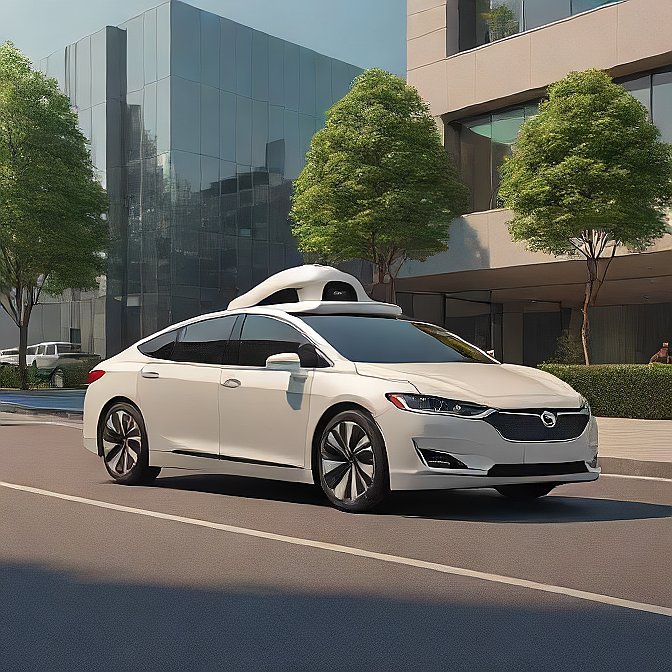
Autonomous technology is buzzing, and today one should exercise a purchase decision with caution.
Who Should Consider Purchasing Today
- There are innovators who are willing to have advanced driver-assist features.
- Business firms are making investments in logistics and fleets or experimenting with autonomous technology.
Cost Factors and Technology Maturity
- Complete Level 5 vehicles are still very costly and not common.
- Level 2-3 cars are cheaper but need constant attention from the driver.
Practical Buyer Tips
- Think of local laws and infrastructure in favour of autonomous cars.
- Consider such aspects as software updates and manufacturer support.
- Examine vehicles with enhanced driver-assist and safety functions, in case at this point a person is not prepared to possess complete control yet.
It can be worth waiting, but it is still possible to achieve real gains through careful allocation of funds to the existing technology of Self Driving Cars.
Conclusion:
Self driving cars are as near as ever to being a reality, but full autonomy Level 5 vehicles are not in the mainstream yet. The modern AI, sensor, and connectivity development has already introduced partial automation to our everyday routine, which makes driving safer and more efficient. Pilot programs and controlled deployments give a future hint at the time when autonomous vehicles will be able to transform transportation, minimise accidents, and contribute to the mobility of all.
Nevertheless, issues such as legal regulations, cyber, ethical considerations, and complicated situations on the roads in cities are still present. The fact remains obvious, more intelligent and semi-autonomous vehicles will be present in 2025, yet a fully driverless world is yet to be witnessed. Being aware, staying updated with technology, and cautiously watching the first-mover wave is important in this current emerging age of mobility.
For more info: Click Here.
FAQs
1. Are Autopilot cars legal in all places?
No. The laws differ both by country and even by state. The rest of the regions are either partly automated (Level 2-3) or completely autonomous. Level 5 is limited only to testing areas. Local laws should be consulted before autonomous features can be used.
2. Are Self Driving Cars safe this time around?
Autonomous systems of the new world facilitate the reduction of the number of human errors and increase the level of safety, but they are not immortal. Most of the vehicles available in the market today are Level 2 or 3 and they require the attention of the driver. Testing has seen accidents although rarely, hence the reason why they must be used with care.
3. What will be the time of full autonomy cars in the market?
Analysts also assume small fleets operating in gated zones can take shape by 2025, with a mass deployment of Level 5 mass-market cars possibly logically coming around the year 2030, subject to technological, infrastructural, and regulatory advancement.


Nice !!!!