
Table of Contents
Introduction
There is much confusion in picking the appropriate vehicle and this contains a lot of truths in the year 2025 when the automobile market is inundated with choices. SUV vs. Crossover can be regarded as one of the most frequently occurring dilemmas that buyers are confronted with nowadays. At the very beginning, these two types of vehicles might seem to be alike; however, their purposes and their owners appeal to very different lifestyles and needs.
Are you in need of the off-road prowess, or the economy in a vehicle, or the comfort and fun that the family allows you? Whatever your next purchase, it is essential to know the difference between an SUV and a crossover before you buy. Here, we are going to discuss the main differences, performance aspects, prices, and design trends of models of 2025 and in the process, make a wise decision that suits your lifestyle.
At the end of this paper you will know exactly which one of the two is the most fitting when it comes to your driving style, requirements, and budgetary constraints, and there can be no doubt that you will be able to mediate the SUV vs. Crossover debacle.
SUV vs. Crossover
As far as the discussion of the SUV vs. Crossover is concerned, the initial differences begin with the basic design.
- The SUVs are conventionally constructed on a body-on-frame similar to a truck. They are equipped in their construction with towing, off-road and heavy-duty performances. The 4Runner model, Ford Expedition and Jeep Grand Cherokee are the most popular types of SUVs in the year 2025.
- Instead, crossovers are unibody designed which is more like a car. It is a lighter model, consumes less fuel and is not hard to drive in the urban setting. The Honda CR-V, Toyota RAV4 and Mazda are the popular 2025 crossover models.
| Feature | SUV | Crossover |
| Platform | Body-on-frame | Unibody |
| Off-road capability | High | Moderate |
| Towing capacity | Strong | Limited |
| Fuel efficiency | Lower | Higher |
| Driving feel | Rugged, truck-like | Smooth, car-like |
This is the basic distinction that you should know to be in a position to make an effective choice based on your driving needs and also your lifestyle.
Performance Showdown
At this point, the distinction between SUV and Crossover comes in extremely handy as far as performance is concerned:
- During Dynamics: SUVs are more active on hard roads and weight volume, and crossovers are more convenient in urban traffic.
- Towing/Off-Road :SUVs can take bigger trailers and move over off-road paths; therefore, they are the more appropriate option in case the individual is an adventurer. Crossovers are able to tow light and moderate off-road.
- Powertrain and MPG: SUVs in the future, which include the Chevrolet Tahoe and the Ford Bronco, come with V6 and V8 engines but with lower fuel economy. These cross overs as the Hyundai Tucson and the Subaru Forester, are aimed at smaller engines with superior MPG.
In real-life scenarios, A crossover can be more useful when you are commuting to the workplace on a daily basis or even when you are going to make some errands. A SUV would be more suitable because sometimes you have some gear and you always have to go to places where there are no laid roads.
Visual implication: Incorporate an infographic that compares the city and off-road performance, towing capacity and fuel efficiency so that they can be quickly viewed.
Space and Comfort: Which One Fits Your Lifestyle?
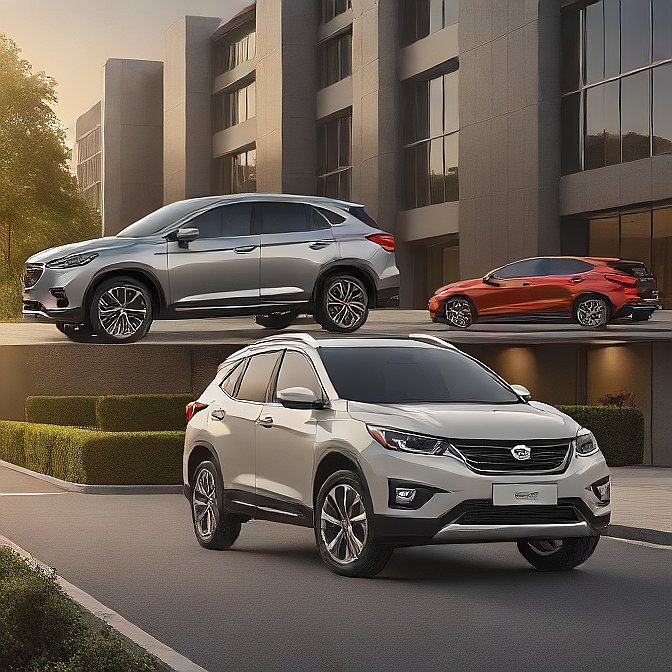
Space and comfort are by far deal-breakers in getting to the choice of either an SUV or a crossover.
- Interior Space: SUVs have a relatively higher amount of legroom, headroom and cargo capacity. Crossovers are manoeuvrable, easier to park and some are smaller.
- Tech and Comfort: Both of these 2025 models will include high-level infotainment and wireless charging, as well as driver-assistance technology, although SUVs might include high-end features on higher levels.
- Lifestyle Fit: SUVs may be the best model for families that have many passengers or have heavy equipment. Crossovers would suit well those of the couple, small family, or drivers in the city who require both comfort and practicality.
A horizontal arrangement of interior space and technological aspects would enable the readers to visualize which car fits their demands quickly.
Check Out: Cruiser vs Sports Bikes 2025: Which Ride Matches Your Style?
SUVs Safer Than Crossovers?
One of the main problems of a buyer when comparing SUV vs. Crossover is the problem of safety.
- Interpretation of Crash Test Ratings: SUVs and crossovers in 2025 are generally rated favorably by both the NHTSA and the IIHS crash tests, yet these ratings are based on the fact that the weight and size of large SUVs have some sort of an advantage in multi-car crashes.
- Normal Safety Technology: The auto emergency braking, the lane-keep assist, the blind-spot technology, and the adaptive cruise control are now the standard features that belong to the normal Safety Technology of Autopilot Safety Technology Crossovers. SUVs and more so the upper trims are more likely to be well equipped in the system of collision mitigation and off-road stability, as well as have better airbag systems.
- ADAS. The presence of the semi-autonomous functions, 360-degree view, and intelligent parking assistance can be found even in the 2025 SUVs and crossovers. These systems open up and enable the transportation of the city and long-distance usage to be more secure and this diminishes the safety gap between the two types of vehicles.
Imagery cue: Add a table of the common and non-typical safety features of the popular 2025 models of SUVs and crossovers.
Budgeting for SUV vs Crossover
Price: It is one of the determinants in relation to SUV vs. Crossover:
- Base vs Fully Loaded: SUVs are relatively expensive to get started and most premium trims come with features that are likely to make them prohibitively expensive. Crossovers are less expensive and also better tech-price ratio.
- Fuel Economy and Maintenance: Crossovers have good MPG and lower maintenance because they are made of a light unibody. SUVs consume more fuel, and may cost more to repair, particularly off-road models or those models heavy enough to be used to tow.
- Depreciation/Resale Value: Bigger SUVs can have higher value to the purchaser, who may require more ruggedness, whereas crossover models usually have a more rapid depreciation, but also a lower overall cost of ownership.
These differences can be easily understood in a side-by-side table with starting price, fuel economy, insurance and anticipated depreciation as indicated.
Styling and Aesthetics: Which Design Speaks to You?
Look and design trends are a common factor in determining a vehicle:
- Exterior Styling: SUVs of 2025 are more inclined towards a rugged and aggressive appearance with thick lines and huge grilles, and the city-friendly slickness of the crossovers.
- Interior Design and Luxury: SUVs are usually more spacious in the interiors and have high-quality materials such as leather seats and high quality climate control. Crossovers are concerned with ergonomic interiors and technology-oriented dashboards.
- Customization Options: Both of them have different trim grades, color selections, and accessory configurations. With crossovers, there is generally an opportunity to personalize more city-oriented accessories, whereas with SUVs, it is off-road and adventure accessories.
Visual hint: Have a side-by-side gallery of 2025 SUV and crossover models to display the difference in the exterior and interior designs.
Choosing the Right One for Your Needs
The conclusion is based on lifestyle and priorities:
Lifestyle Based Recommendation:
- Family vacation: Comfort, space and safety in a mid-size or full-size SUV.
- Off-road/adventure: SUVs that are rough with high towing capability and all-terrain capabilities.
Boil down Questionnaire SUV vs. Crossover:
- Require towing and off-road use — SUV.
- Desire better fuel economy and simple driving in cities → Crossover.
- Focus on passenger/cargo space interior- SUV.
- Focus more on affordability and manuverability → Crossover
Pros & Cons Summary:
| Type | Pros | Cons |
| SUV | Spacious, rugged, high towing | Lower fuel efficiency |
| Crossover | Fuel efficient | Less towing, smaller cargo |
As soon as you start thinking about your way of life, your budget, and the need to drive, you can certainly know what SUV or crossover will fit in the next year, 2025.
Conclusion
The decision of an SUV or a Crossover in 2025 need not be difficult. SUVs have rough performance, increased capacity, and towing ability; thus, these are effective for families, adventure travelers and off-road lovers. Crossovers, in their turn, will offer fuel efficiency, urban handling, and high-tech capabilities, which are appropriate for urban commuters and small families.
With the knowledge of the structural, performance, safety, cost, and design differences, you will be able to take an informed decision and purchase one that suits your lifestyle, driving habits and budget. Roughly or helpfully, it doesn’t matter; there is a car in the market that is just made to your requirements.
For more info: Click Here.
FAQs
1. Which is better crossover or SUV?
It depends on your need. The Crossovers will be cheaper to drive and operate in the city compared to the SUVs who will outdo the former in towing, off road and passenger/cargo carrying.
2. Is it less expensive to service crossovers than it is to service SUVs?
Generally, yes. The crossovers are also lighter and unibody, have smaller engines and in most cases consume less fuel, insurance cover and have low maintenance costs as compared to the SUVs.
3. Who has the highest value 2025 SUV/crossover?
The hybrid ones such as the Toyota RAV4 and the Honda CRV are a combination of low prices, fuel efficiency and technological provisions in the case of 2025. In the case of the SUV automobile such as the Ford Bronco or the Chevrolet Tahoe the life span and off-road capability are included and the purchasers of these automobiles are willing to pay more not the cost-effectiveness.


There are a lot of reasons that others will post, but I have another take.
Crossovers and Trucks are popular because they are symbols of AMERICAN EXCESS. Americans want to take their culture to the world!!!
That’s an interesting perspective. Beyond practicality, crossovers and trucks also represent a cultural statement—big, bold, and expressive. For many buyers, they symbolize freedom, power, and a larger-than-life lifestyle that has long been associated with American automotive culture.