Table of Contents
Introduction: The Silent Power Behind Modern Cars
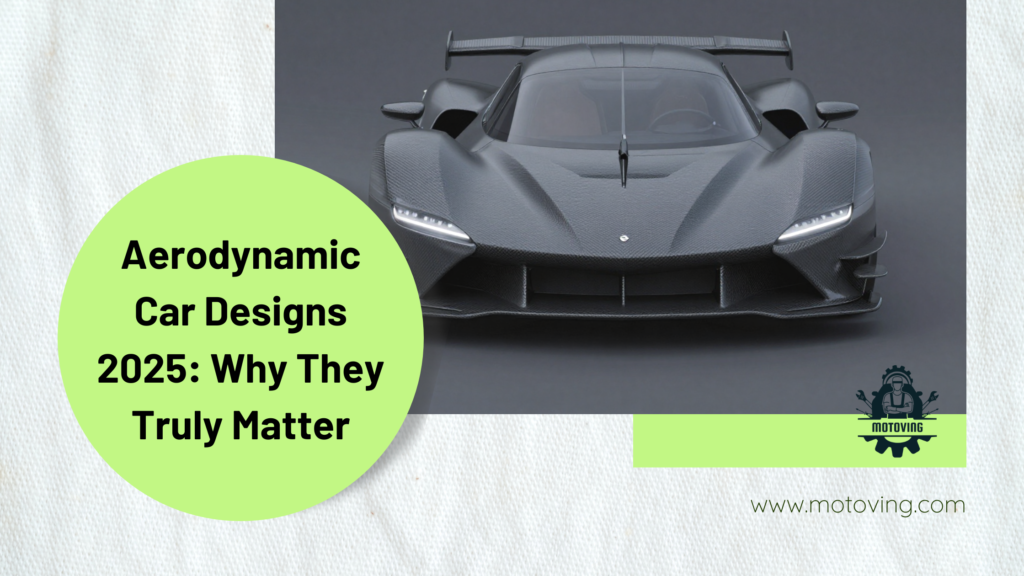
When the majority of people consider car performance, they think about engines, horsepower, or the size of the battery. However, one of the strongest forces that determines the driving performance, fuel performance, and feel of the road of a vehicle is an unseen element known as Aerodynamic Car Designs. Heading into 2025, aerodynamics is not used in race cars or luxury models only. They have become an essential part of daily cars, particularly with the increase in fuel prices and the quick transition to electric mobility.
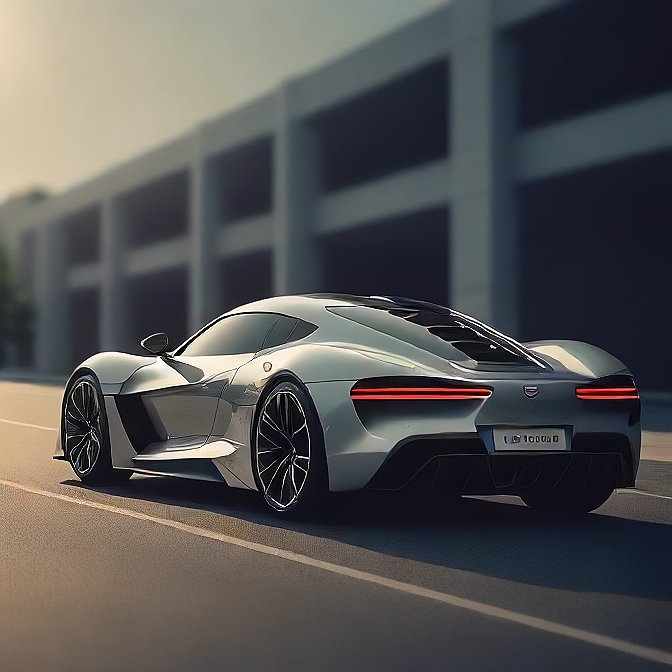
Aerodynamic Car Designs of the modern world aid cars to slice through air resistance better, which enhances fuel consumption, increases the electric vehicle range, and provides a smoother and more stable ride. Between the smooth body designs to smart airflow designs, the companies are spending a lot of money on designs that could make the difference between the driver and the road. We will discuss in this article what is the real relevance of aerodynamic car design in 2025, and how it has a direct influence on your driving experience, expenditure, and comfort.
What Are Aerodynamic Car Designs? (Simple Explanation)
Aerodynamic Car Designs aim at designing cars in such a way that the air flows around them without retardation. The aim is to make the car drag less, stable and make it move more efficiently. Simply put, the less air resistance a car must have to overcome, the more it will perform, whether by fuel economy, EV range or providing ride comfort. In 2025, modern cars will be designed with aerodynamics in mind from the initial sketch of the design.
The Airflow Around Vehicles Science.
As a car is traveling, the air is pushed aside. Clogged air causes drag, thereby reducing the speed of the car and compelling the engine or battery to burn more energy. Lift may also be experienced in increased speed, decreasing the tire grip and stability. Aerodynamic Car designs coordinate the airstreams such that air flows over, under and around the vehicle in a clean manner and thus resulting in minimal resistance and ensuring that the vehicle remains on the road.
The Major Aerodynamic features in contemporary cars.
The current-day vehicles have various design characteristics that allow them to manage the air flow. The smooth body shapes have minimized turbulence and the grille shutters are opened to close automatically to maintain equilibrium between cooling and drag. The bottom panels and diffusers make the airflow in the underbody smoother, which enhances the steadiness and efficiency of the car. These components combine to provide actual world performance improvements without the driver needing to alter his/her driving style.
Why Aerodynamic Car Designs Matter More in 2025
Because of even stricter emissions regulations, fuel prices, and the appearance of electric vehicles in 2025, the Aerodynamic Car Designs have become more valuable than ever. Aerodynamics is no longer a luxury feature being used by manufacturers; it is now a necessity in achieving efficiency goals and driver expectations.
EV Power Range & Fuel Efficiency.
Improved aerodynamics also eliminates the use of fuel and energy. The cars that have optimized air flow do not need a lot of power to sustain speed and particularly on highways. In the case of electric cars, Aerodynamic Car Designs will be able to provide significant additional distance to be covered by the electric vehicle without having to expand the battery size, thus EVs will be more affordable and feasible.
Enhanced High-Performance Stability and Handling.
Aerodynamic gains are used to provide better control of the vehicles on a highway and performance speed. The low lift and equalized airflow allow tires to be more stable on the road and thus give better control in steering, lane change and confidence at long-distance rides.
Reduce Wind Noise in Less Noisy Cabins.
Aerodynamic Car Designs are also comfortable. Modern cars have significantly less wind noise because the air turbulence around mirrors, windows and rooflines is less. This results in less noise in cabins, less exhaustion in drivers and a more high-end driving experience-something that drivers experience instantly.
Aerodynamic Car Designs vs Traditional Car Shapes
Earlier, boxier designs of vehicles were carefully constructed with style or utilitarianism without much consideration for the airflow efficiency. Modern Aerodynamic Car Designs, on the contrary, focus on the smooth movement of air and, therefore, the improved overall performance and efficiency.
Comparison of the Coefficient of Drag Explanation.
The drag coefficient determines the ease of movement of a car in the air. Reduced values represent superior aerodynamics. Car models that are designed with advanced Aerodynamic Car designs tend to exhibit much lower drag coefficients which is converted into practical advantages such as improved mileage, extended EV range and increased stability.
Management Performance Differences You Can Measure.
The benefits of aero are not imaginary. The difference that drivers can measure is accelerating faster at speed, reduced braking distance because of enhanced stability, and improved cornering. Aerodynamic designs have produced performance benefits that are easy to recognize and useful in day-to-day driving.
How Electric Vehicles Are Pushing Aerodynamic Innovation
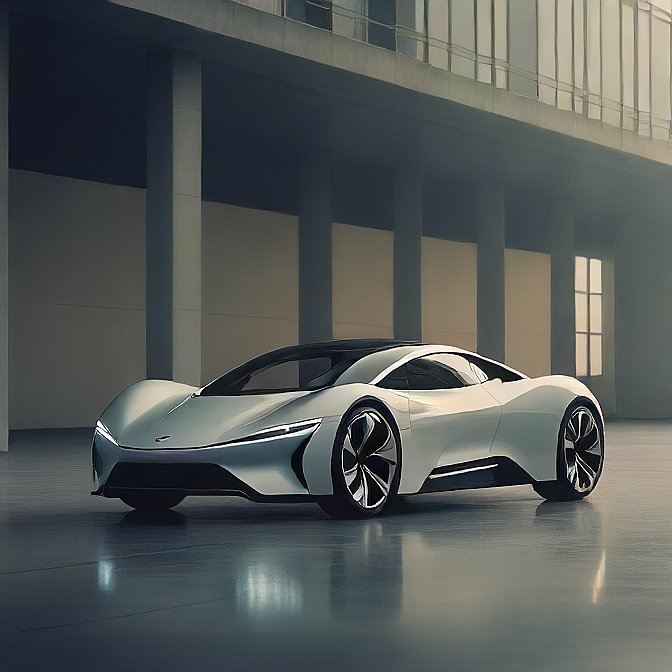
In 2025, electric vehicles will lead the aerodynamic development. As compared to traditional vehicles, EVs do not need additional energy because they are solely dependent on the stored electrical energy; hence, Aerodynamic Car Designs are an essential consideration when it comes to maximizing efficiency. With the increasing competition in the EV market, the use of aerodynamics as a competitive edge is being employed by the manufacturers to provide more range, more relaxed performance, and a quieter ride.
The Reason why EVs require so much reliance on Aerodynamic car designs.
In the case of electric cars, any decrease in air drag is directly converted into greater battery efficiency. Better aerodynamics enable the EVs to cover more distance with a single charge without raising the battery size and weight. Aerodynamic Car Designs contribute to minimizing energy loss at highway speeds, where air resistance is the largest constituent with regard to range, and thus are required to make EVs practical in the real world.
Design Innovations that are inspired by EV Platforms.
The new aerodynamic possibilities have been opened by EV-focused platforms. The front end is made smooth with no grilles as electric vehicles need less cooling as a result of which drag is reduced significantly. Flush door handles help to reduce the disruption of airflow in the side of the vehicle and camera-based side mirrors help to reduce turbulence of huge mirror housings. Such design modifications are currently emerging as the norm in the next generation of automobiles.
Active Aerodynamics: The Smart Upgrade of 2025
It is no longer sufficient to have stationary designs. Active aerodynamics will enable cars to change shape on the fly, minimizing airflow depending on the speed or weather conditions and driving conditions. This is the clever thing to do; it takes Aerodynamic Car Designs to a better level.
Adjustable Spoilers, Air Vents and Ride Height.
The contemporary vehicles are now being equipped with adjustable spoilers, adjustable air vents, and variable ride heights. These systems are aimed at cooling and comfort when at low speeds. They automatically change trade-off at higher speeds, reducing drag and increasing downforce which enhances the stability and efficiency without any control by the driver.
Aerodynamic Systems controlled by AI.
Aerodynamics is changing with artificial intelligence. Smart, AI-run systems receive the speed, steering, wind data and road data so that the airflow can be optimized immediately. The intelligent Aerodynamic Car Designs mean that the vehicle will always be at its best efficiency, whether on highways or going through cities.
Real-World Benefits Drivers Notice Immediately
Even though aerodynamics might be a technical term, the advantages are not hard to experience. Drivers will feel the difference within the first day, which will result in Aerodynamic Car Designs being a good asset, not only a design fashion.
Increase in Mileage Without the Consumption of Driving Habits.
The increased mileage without any changes in driving behavior is one of the greatest benefits. Airflow efficiency minimizes energy loss, resulting in the reduction of fuel or an increase in EV range. This in the long run leads to a lot of savings in fuel or charging expenses during the life of the vehicle.
Greater Safety in the Windy Weather.
Safety is also enhanced by Aerodynamic Car Designs. The drag is minimized and the balance of airflow is improved, which makes it more stable in bad crosswinds and when passing large units. Drivers also have a quicker steering action and feel more confident when driving on the highway and during adverse weather.
Check Out: Reliable Bikes 2025: Top Picks for Long-Distance Riding.
Top Car Brands Leading Aerodynamic Car Designs in 2025
Other auto companies are establishing new standards in Aerodynamic Car Designs through the use of superior engineering and intelligent styling to provide maximum efficiency and performance. Electric-oriented and performance-oriented brands are in 2025 demonstrating that aerodynamics can be used to improve the everyday driving experience, along with high performance.
Electric & Hybrid Leaders
Such manufacturers as Tesla, Mercedes EQ, and Hyundai Ioniq are at the focal point of innovation in aerodynamics. Their car models have ultra-low drag coefficients, flat underbody sides, and air-optimized bodies. These Aerodynamic Car Designs assist in increasing the driving range, more economical energy consumption, as well as more silent cabins- major concerns among EV and hybrid purchasers.
Performance Brands Transforming Aerodynamics.
The performance manufacturers like Porsche, BMW, and Audi are becoming a mixture of speed and effectiveness. Aerodynamic Car Designs by combining active aerodynamics, lightweight materials, and precise control of airflow will enhance acceleration, cornering stability, and high-speed control of the brand without making performance hard to use on a daily basis.
Are Aerodynamic Car Designs Worth It for Everyday Drivers?
Aerodynamics not only give an appearance or performance in racing to most drivers, but these provide some practical advantage in everyday driving. Aerodynamic car designs will be available in 2025 and they will enhance efficiency and comfort in all kinds of road environments.
Impact of Highway Driving vs Impact of City Driving.
Although the greatest advantages of aerodynamics are on highways, drivers in cities also enjoy a smoother flow of air and fewer energy losses. Aerodynamic Car Designs on highways are much more fuel-efficient and have a longer electric range since they reduce drag. Within the city, they help to achieve smoother rides and acceleration.
Long-term Cost/Efficiency Benefits.
Car models that have good aerodynamic profiles are more economical in the long run. There is the cost of lower fuel or charging, less mechanical load and resale value. To the average motorist, Aerodynamic Car Designs would mean saving money in the long run and a higher value of ownership.
Aerodynamic Car Designs of the Future and Beyond.
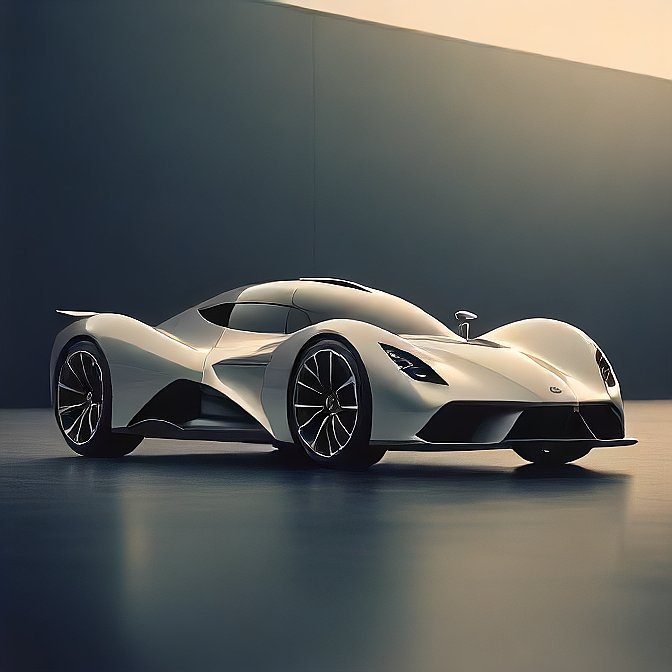
Due to the constant transformation in technology, aerodynamics will be more involved in vehicle design. The innovations in the future are focused on smarter, lightning-fast, and sustainable cars.
Greener Materials and lighter Structures.
Manufacturers are also investigating the field of environmentally-friendly materials and space-saving structures that would increase aerodynamics and decrease the harm to the environment. The improvements enable Aerodynamic Car Designs to provide more efficiency without the weight and complexity of vehicles.
Self Driving Cars and Ultra Low Drag Prototypes.
Self-driving cars will also focus on ultra-low drag profiles to ensure that the vehicle is maximally efficient and as comfortable as possible for passengers. Get to look forward to better silhouettes, concealed cameras and adaptable body panels in the Aerodynamic Car Designs in order to accommodate autonomous driving technology.
Conclusion:
In 2025, Aerodynamic car design will not be a luxury item attached to modern cars but will be a necessity. They are efficient in fuel consumption, increase the range of EVs, make them safer, and design more comfortable and quieter rides. To a car buyer, it is simply a matter of making wiser decisions that would bring in long term value, enhanced performance and in the process provide a better driving experience.
For more info: Click Here.
FAQs
Q1: Are the Aerodynamic Car Designs useful in increasing fuel efficiency?
It can, and will, reduce air resistance, which will cause the vehicles to use less energy, which will result in better fuel economy and the EV’s range.
Q2: Does it imply that aerodynamic properties are helpful at the point when the vehicle moves at high speed?
Although the effects are generally felt mostly on highways, aerodynamic structures enhance stability, reduce noise and improve efficiency at lower speed levels.
Q3: Can the car designs be minimized to minimize the road noise using aerodynamic design?
Absolutely. The air flow is unhampered and wind turbulence around the vehicle is minimized and hence makes the cabin quiet and results in comfortable driving.