Table of Contents
Introduction
The driving experience is changing more than ever, and the Smart Dashboard is surrounded by the revolution. The dashboards are now smart interactive systems that change the way we interact with our vehicles and no longer simply a collection of dials and gauges. Convenience, safety, and control on the road are being redefined by smart dashboards, which display real-time navigation information and are personalized by AIs, without any issues with smartphones and other devices of the smart home.
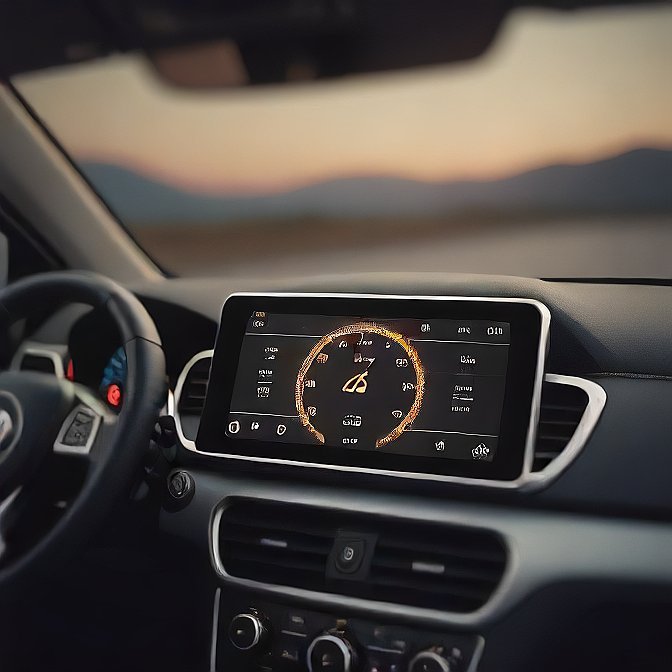
With the year 2025 approaching, car manufacturers are pushing the limits of the functions a dashboard can perform, as it is no longer a device only to aid in driving, but the heartbeat of cars in the modern era. Whether you are a tech enthusiast driver or just a regular person who wants a more connected and safer ride, to get to the future of cars, it is important to understand the emergence of smart dashboards.
What Are Smart Dashboards? A Quick Overview
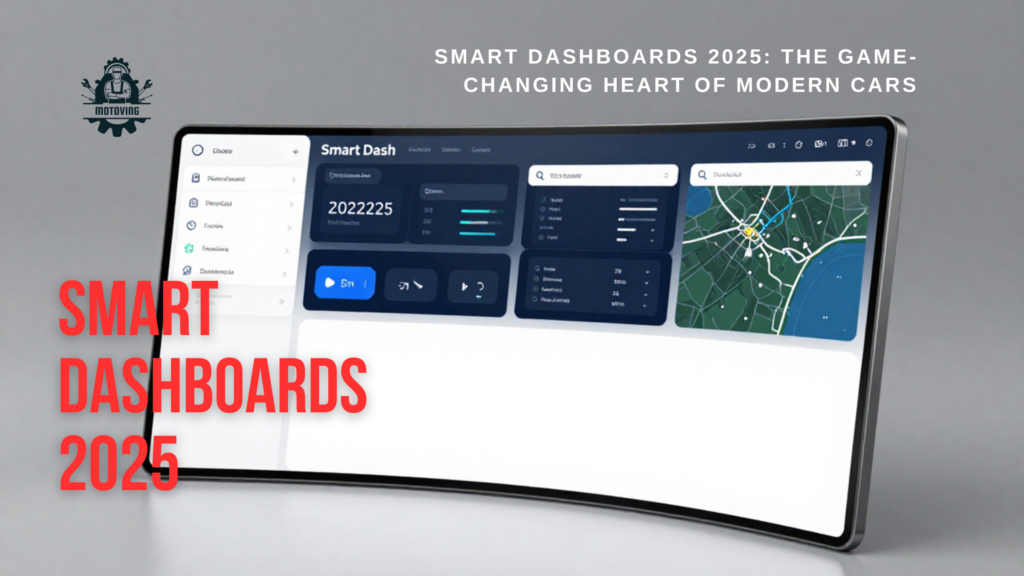
Smart dashboards are highly technological interfaces in the new car that substitute the traditional instrument cluster. They offer real-time and interactive controls, as well as customization for the driver and the passengers.
Key Components
- Digital displays: Large screens that depict screen navigation, media and car statistics.
- Connectivity: Communication with smartphones, cloud computing and IoT devices.
- AI Integration: The adaptive systems that learn the behavior of the driver so as to give him a personalized experience.
Difference Between Traditional Dashboards and Smart Dashboards
In contrast to the analog dashboards, smart dashboards have rich dynamic and customizable interfaces with real-time feedback and AI-based insights.
Drivers and Passengers Benefits.
- Better security using notifications and foresight analytics.
- More convenience through built-in applications and smart controls.
- A better-connected and fun drive.
The Evolution of Car Dashboards
- Timeline: From Analog Dials to Fully Digital Interfaces
- Dashboards have developed by being more than mere mechanical gauges to serving as a full digital display and the command center of the vehicle.
- Dashboard Technology Milestones leading to 2025.
- Start of the 2000s: There is the introduction of LCD screens and digital gauges.
- Touchscreen infotainment systems will be standard.
- 2020s: AI-based dashboards and the functionality of connected features become popular.
- The Relation between Smart Dashboards and the Larger Trends of Automotive Innovation.
- One of the core aspects of the connected car revolution is the connected car Smart dashboards, and the Smart dashboards put safety, convenience, and personalization on a whole new level and also coexist with autonomous and electric vehicle innovations.
The most prominent characteristics that render the smart dashboard Game-Changing.
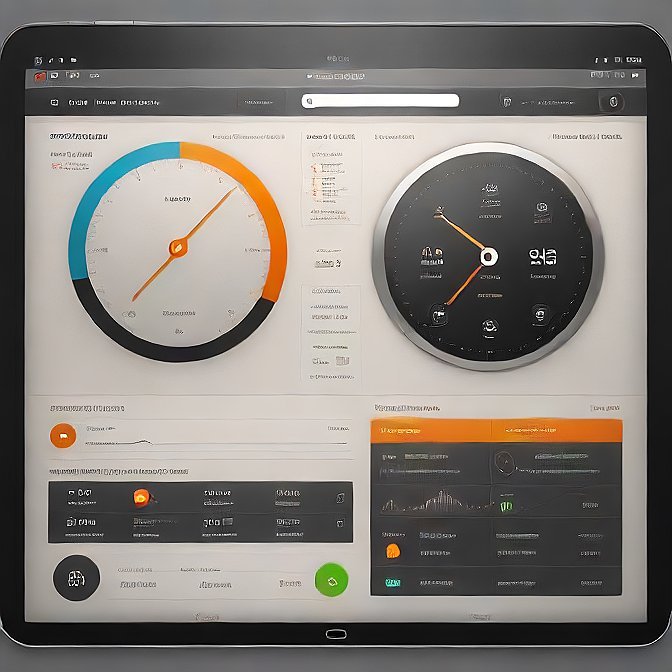
- AI Powered Personalization
- Adjusts settings according to the interests of the driver, way of driving and route recommendations.
- Predictive Analytics and Data in Real Time.
- Optimizes driving by monitoring efficiency, maintenance warning, and performance of the vehicle.
- Intelligent Hybridization between Smartphone and IoT.
- Authors links with applications, smart domestic and cloud services to create an integrated experience.
- Voice and Gesture Controls
- Allows hands-free navigation, media control and vehicle control which is safer.
- Dynamic Displays
- Adapts displayed information according to context- some navigation, media and safety warnings will be displayed when necessary.
How Smart Dashboards Enhance Safety and Efficiency
- Crash avoidance and dashboard sleepiness warning devices.
- Accidents and the danger of driving under the influence of drowsiness or distraction can be prevented with the help of live alerts.
- Engineer Advanced Driver Assistance Systems (ADAS).
- Dashboards have visual and auditory indicators of lane-keep, adaptive cruise and emergency braking systems.
- Eco-friendly driving, Fuel and Energy Monitoring.
- Helps drivers make the use of energy more efficient in electric cars or make combustion engines more fuel efficient.
- Personalized Notifications on Urban vs. Highway Driving.
- Custodial displays change notifications based on the traffic conditions, the speed limit, and the driving conditions.
Check Out: Bike Seat Design 2025: Ultimate Comfort for Long Rides.
The Role of AI and Machine Learning in Smart Dashboards
- The Learning of AI of Driving Habits and Remodeling the interface.
- The artificial intelligence in smart dashboards notices the driving habits and preferences and dynamically changes the display of the car, the recommended routes and alerts to offer a more personalized experience.
- Maintenance and Route Optimization Predictive Analytics.
- AI anticipates the maintenance need when the issues have not arisen yet and recommends the most effective routes, which save time, fuel, and wearing the vehicle.
- The Future Potential: AV and Dasher Intelligence.
- Further on, the independent technology will mean an intelligent car dashboard, the interface of human drivers and AI, where situational awareness and real-time assistance in decision-making will be offered.
Connected Car Ecosystem and Smart Dashboards.
- Smart Home Devices and Cloud Services Integration.
- Smart dashboards enable the easy management of the devices connected, whether it is by adjusting the thermostats at home when one is away or even by coordinating the calendar and media preferences.
- Smart Traffic Control Vehicle-to-Everything (V2X) Communication.
- The live feeds on other vehicles will allow them to see the feeds in the dashboards and this will reduce congestion and enhance navigation.
- The Pivotality of Data Privacy and Cybersecurity in Linked Dashboards.
- As the interconnectedness increases, the safety and security of the driver data and cyber threats prevention are the most vital factors to enable safe and efficient use of the smart dashboard.
Top Trends in Smart Dashboards for 2025
- AR/VR Interfaces and Touchless Controls.
- The new sophisticated dashboards have gesture controls and AR GPS overlay on the screens to provide safety and navigation.
- Minimalism and Maximum functionality.
- Intuitive easy to clean interfaces are sleek on the essential information.
- Sustainability: Green Materials and Low Power displays.
- The car manufacturers are incorporating greener displays and eco-friendly materials without reducing performance.
- Smart Dashboard Popularity in New Models.
- An overview of the best systems that the major brands use and their peculiarities.
Choosing the Right Smart Dashboard for Your Car
- Consideration: Compatibility, Features, Price.
- Take into account the presence of the dashboard in your car model, the nature of your work and the financial possibilities.
- Original vs. Third-Party Smart Dashboard.
- Advantages and disadvantages of the original equipment manufacturer (OEM) systems and the aftermarket upgrades.
- Future-Proofing the Dashboard Technology of your Car.
- Pointers on the choice of systems that can be adjusted to the updates of the software, new applications, and changes in the vehicles.
The Future of Driving: Beyond Smart Dashboards
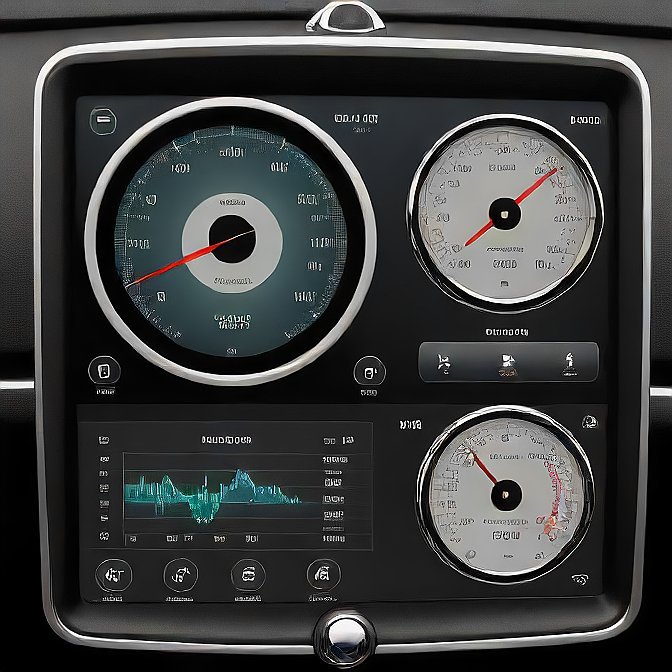
- Fully Autonomous Vehicles Integration.
- Intelligent dashboards will develop to give supervision and management of semi- and fully autonomous vehicles.
- Intelligent Vehicle/Car and driver Prognostics.
- Newer dashboards can monitor vehicle health, even the driver’s wellness to increase the safety.
- The Next Decade Vision in the Automotive Dashboards.
- Dashboards will be used to provide links between AI and autonomous systems, as well as IoT devices and cloud services, as it transforms vehicles into fully connected smart mobility platforms.
Conclusion
Smart dashboards will cease to be a cool addition to a vehicle, but will be the core of the future of automotive technology in 2025. These dashboards will revolutionize the way we drive and make it safer, more efficient and convenient with the help of AI, connectivity, and intuitive design. Smart dashboards are defining the future of driving, transforming all journeys into smarter and more enjoyable ones thanks to real-time predictive analytics, effortless integration with smart devices and so forth.
As the direction of technology shifts currently, the introduction of smart dashboards will allow drivers to stay ahead in a world where cars will cease to be machines and become smart and networked companions on the road.
For more info: Click Here.
FAQs
1. What is a smart dashboard and what does it entail as compared to a traditional dashboard?
A smart dashboard is an interactive and technological gadget that offers real-time data, data interpretation with the help of AI, and connectivity. Smart dashboards are dynamic and are connected to smartphones and other devices unlike the case with the adoption of the old-fashioned dashboards where the set of gauges that are present cannot be changed.
2. Can a smart dashboard improve driving efficiency and safety?
Yes. Smart dashboards contribute to safety by providing collision warnings, fatigue warnings to drivers and road warnings. Another efficiency they enhance is by means of predictive maintenance notifications, fuel/energy monitoring, and route optimization.
3. Can all cars be operated on smart dashboards, or just new ones?
Although most of the new cars are characterized by an in-built smart dashboard, there are also aftermarket products that can be used to upgrade older ones. The compatibility will depend on the make and model of your car and the features you require but the future-proofing is becoming more and more compatible across a large variety of cars.